Updated November 2025
What is RSV?
Respiratory syncytial virus, or RSV, is a common respiratory virus that infects the nose, throat, and lungs. RSV symptoms make it difficult to distinguish it from the common cold or other respiratory viruses (like the flu or COVID-19). RSV spreads in the fall and winter along with other respiratory viruses. It usually peaks in December and January.
Families should know about RSV because some children can get very sick and need hospitalization.
RSV in Infants and Young Children
What to know
- RSV can be dangerous for infants and some young children.
- RSV is the leading cause of infant hospitalization in the U.S.
- Immunizations can protect babies from getting very sick from RSV
Two to three out of every 100 infants under 6 months are hospitalized with RSV every year. Those who are hospitalized may require oxygen, IV fluids (if they are unable to eat and drink), and mechanical ventilation (a machine that helps with breathing). Most improve with this type of supportive care and are discharged in a few days.
RSV Immunization Guidance for Infants and Young Children
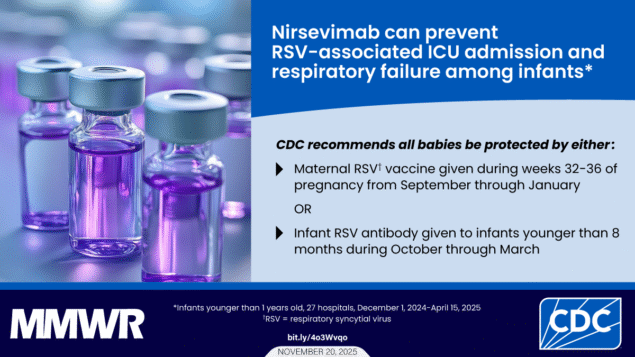
There are two RSV immunizations available. Babies are protected by either their mother being vaccinated during pregnancy, or a shot at birth, or during RSV season. Either choice is very effective at preventing babies from being hospitalized.
- RSV Immunization Guidance for Infants and Young Children | RSV | CDC
- RSV in Infants and Young Children | En español: This fact sheet describes how to protect your child from RSV infection.
Look for these Signs and Symptoms of RSV
Contact your child’s medical provider today if you see any of these:
- Runny nose
- Poor feeding
- Congestion
- Sneezing
- Cough (dry or wet sounding)
- Fussiness, irritability
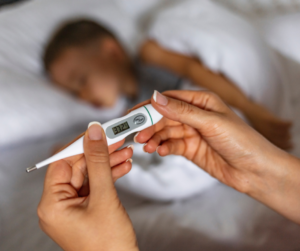
- Fever (temperature of 100.4 or higher)
Your child must be seen immediately by a medical provider if you see any of these:
- Fast breathing
- Flaring of the nostrils
- Head bobbing with breathing
- Rhythmic grunting during breathing
- Belly breathing, tugging between the ribs, and/or the lower neck
- Wheezing
- Lethargy
- Skin/lips turning blue (cyanosis)
How to Prevent Spread
Everyone can take actions to help reduce the spread of RSV and other respiratory viruses.
- Practice good hygiene by covering your coughs and sneezes, washing or sanitizing your hands often, and cleaning frequently touched surfaces.
- Take steps for cleaner air, such as bringing in fresh outside air, purifying indoor air, or gathering outdoors.
- Stay home and away from others when you are sick
Consult your healthcare professional for additional guidance on preventing RSV and other respiratory illnesses.
Learn more!
- RSV: When It’s More Than Just a Cold – HealthyChildren.org (updated 8/19/2025)
- RSV Immunizations: New Ways to Protect Babies – HealthyChildren.org (updated 10/10/2025)
- Test Your Knowledge of RSV Symptoms, Causes & Treatment – HealthyChildren.org (updated 9/23/2025)
- The Flu: What Parents Need to Know – HealthyChildren.org (updated 2/14/2025)