
Click to download or print this infographic in English and Spanish. (Print size 8.333 x 20.832 inches.)
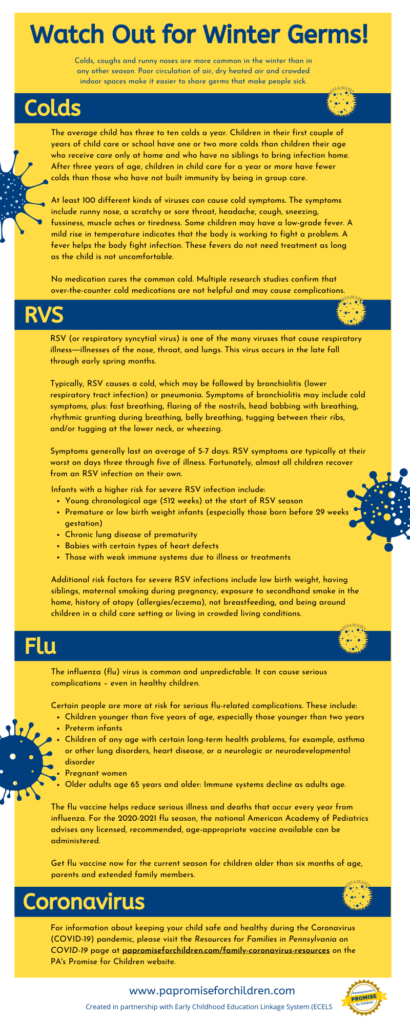
Thanks to our friends at the Early Childhood Education Linkage System (ECELS) for this article.
Colds, coughs, and runny noses are more common in the winter than in other seasons. Poor air circulation, dry heated air, and crowded indoor spaces make it easier for germs to spread, which can lead to people getting sick.
Colds
The average child has three to ten colds a year. Children in their first couple of years of child care or school have one or two more colds than children their age who receive care only at home and have no siblings to bring infection home.
After three years of age, children in child care for a year or more have fewer colds than those who have not developed immunity through group care.
At least 100 different kinds of viruses can cause cold symptoms. The symptoms include a runny nose, a scratchy or sore throat, headache, cough, sneezing, fussiness, muscle aches, or tiredness. Some children may have a low-grade fever. A mild rise in temperature indicates that the body is working to fight a problem. A fever helps the body fight infection. These fevers do not require treatment as long as the child remains comfortable.
No medication cures the common cold. Multiple research studies confirm that over-the-counter cold medications are not helpful and may cause complications.
RSV
RSV (or respiratory syncytial virus) is one of the many viruses that cause respiratory illnesses, including those affecting the nose, throat, and lungs. This virus typically occurs from late fall to early spring.
Typically, RSV causes a cold, followed by bronchiolitis (lower respiratory tract infection) or pneumonia. Symptoms of bronchiolitis may include cold symptoms, fast breathing, flaring of the nostrils, head bobbing with breathing, rhythmic grunting during breathing, belly breathing, tugging between the ribs, and/or tugging at the lower neck, or wheezing.
Symptoms generally last an average of 5-7 days. RSV symptoms are typically at their worst on days three through five of illness. Fortunately, almost all children recover from an RSV infection on their own.
Infants with a higher chance of severe RSV infection include:
- Young chronological age (≤12 weeks) at the start of the RSV season
- Premature or low birth weight infants (especially those born before 29 weeks of gestation)
- Chronic lung disease of prematurity
- Babies with certain types of heart defects
- Those with weak immune systems due to illness or treatments
Additional risk factors for severe RSV infections include low birth weight, having siblings, maternal smoking during pregnancy, exposure to secondhand smoke in the home, a history of atopy (allergies/eczema), not breastfeeding, and being around children in a child care setting or living in crowded living conditions.
Contact a child’s health care provider right away if a child has any:
- Symptoms of bronchiolitis (listed above)
- Symptoms of dehydration (fewer than one wet diaper every eight hours)
- Pauses or difficulty breathing
- Gray or blue color to tongue, lips, or skin
- Significantly decreased activity and alertness
Flu
The influenza (flu) virus is common and unpredictable. It can cause serious complications – even in healthy children.
Certain individuals are more susceptible to severe flu-related complications. These include:
- Children younger than five years of age, especially those younger than two years
- Preterm infants
- Children of any age with specific long-term health problems, for example, asthma or other lung disorders, heart disease, or a neurologic or neurodevelopmental disorder
- Pregnant women
- Older adults aged 65: Immune systems decline as adults age.
The flu vaccine helps reduce the number of serious illnesses and deaths from influenza every year. For the current flu season, the American Academy of Pediatrics recommends administering any licensed, age-appropriate, and recommended vaccine.
Get the flu vaccine for the current season for children older than six months, parents, and extended family members.
Resources
- Cold Weather Outdoor Play Boosts the Immune System!
- RSV: When It’s More Than Just a Cold
- The Flu: What Parents Need to Know
- The National American Academy of Pediatrics Parenting Website: HealthyChildren.org
- Watch the video below for more information on keeping your child safe this winter season.
This article was prepared by Nancy Alleman, BSN, RN, CPNP, ECELS Lead Training/Technical Assistance Coordinator. ECELS is a program of the PA Chapter of the American Academy of Pediatrics. It may have minor edits for length and updated information.